ES
ES  EN
EN 


SNÆFELLSNES PENINSULA GUIDE
Snæfellsnes Peninsula Guide 2025 – Map, Attractions & Travel Tips
Map of the Snæfellsnes Peninsula
An updated 2025–2026 map is essential when planning your trip. It highlights the main roads (Route 54 and the coastal road 574), top attractions such as Kirkjufell, Arnarstapi, Búðir, or Stykkishólmur, along with gas stations and accommodation options — which can be limited in the region.
We recommend having both a GPS and an offline version of Google Maps or Maps.me, since mobile coverage is not always reliable.
Top 10 Must-See Attractions in Snæfellsnes
-
Kirkjufell & Kirkjufellsfoss – Iceland’s most photographed mountain.
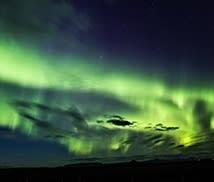
Kirkjufell, often called the “most photographed mountain in Iceland,” is the symbol of Snæfellsnes. Its distinctive cone shape rises dramatically near the town of Grundarfjörður and is perfectly framed by the small but beautiful Kirkjufellsfoss waterfall. The combination of mountain and falls has become an icon featured in countless travel photos and even in the TV series Game of Thrones.In summer 2025–2026, the surrounding area is lush and green, making it ideal for hiking and photography. In winter, the snow-covered peak creates a magical backdrop, and if you’re lucky, you might capture the Northern Lights dancing above the mountain.Kirkjufell is easily accessible from the main road, with a parking lot near the waterfall. Hiking on the mountain itself is not recommended without a guide, as it is steep and dangerous. Most visitors simply enjoy the view from the base — and it’s breathtaking enough. For photographers, sunrise and sunset provide the best light, while long exposure shots at Kirkjufellsfoss create stunning images. -
Snæfellsjökull National Park – A glacier-topped volcano that inspired Jules Verne.
At the western tip of the peninsula lies Snæfellsjökull National Park, dominated by the glacier-capped volcano Snæfellsjökull (1,446 m). This mystical peak inspired Jules Verne’s Journey to the Center of the Earth and continues to attract adventurers and dreamers alike.The park, established in 2001, protects diverse landscapes: lava fields, caves, coastal cliffs, and black sand beaches. In summer, hiking trails allow visitors to explore both the glacier and the surrounding lava formations. Guided glacier tours are available for those who want to walk on the ice safely.In winter, the park becomes a remote and otherworldly place, with icy roads and dramatic contrasts. Driving around Road 574 gives spectacular views of the glacier from different angles. According to local folklore, Snæfellsjökull is a source of mystical energy, and many visitors describe the area as particularly spiritual.For 2025–2026, new infrastructure improvements make the park more accessible, but conditions still depend heavily on weather. Always check with safetravel.is before planning a glacier hike. -
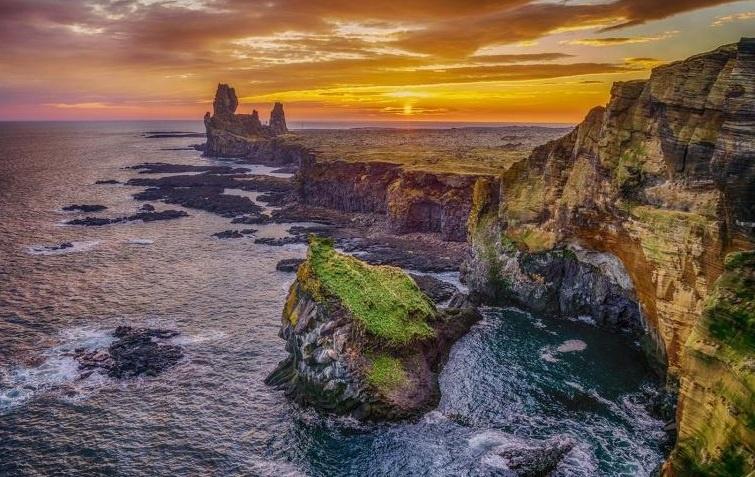
Arnarstapi & Hellnar – Dramatic basalt cliffs and seabird colonies.
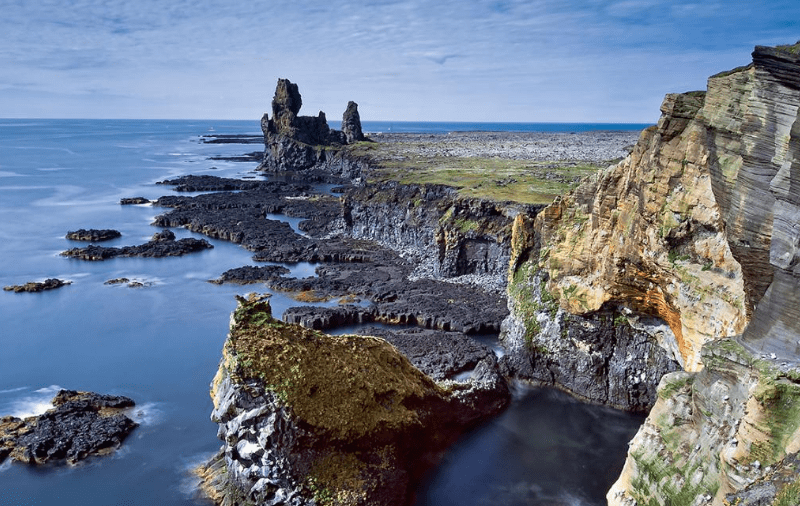
The small fishing villages of Arnarstapi and Hellnar are famous for their dramatic coastal scenery. Basalt cliffs, natural arches, and caves line the shore, creating one of the most beautiful walking trails in Iceland. The 2.5 km path between the two villages takes about an hour and passes by striking lava formations and bird colonies.Highlights include Gatklettur, a natural stone arch carved by the sea, and the impressive statue of Bárður Snæfellsás, a half-human, half-troll figure said to be the guardian of Snæfellsnes.In summer, the cliffs are alive with nesting seabirds, while in winter, the crashing waves against the basalt columns create a dramatic spectacle. Both villages also offer cozy cafés where travelers can warm up and enjoy traditional Icelandic food.For 2025–2026, Arnarstapi remains one of the peninsula’s most photographed spots. It’s accessible year-round, though paths may be icy in winter. This area perfectly combines nature, folklore, and history, making it a must-stop. -
Búðir & the Black Church – An iconic church surrounded by lava fields.
The tiny hamlet of Búðir is home to one of Iceland’s most photographed buildings: the Black Church (Búðakirkja). Standing stark against the surrounding lava fields, the church creates a striking contrast with the natural landscape.Originally built in the 18th century and reconstructed in 1987, Búðakirkja is still used for weddings and local services. Its minimal black wood design and isolated setting make it a favorite subject for photographers year-round.Nearby, the Búðahraun lava field is worth exploring. Covered in moss and surrounded by golden beaches, it provides a peaceful setting for short hikes. The area is also home to Búðir Hotel, a popular accommodation option for those seeking a romantic stay.In 2025–2026, Búðir continues to attract travelers looking for an authentic Icelandic atmosphere. Whether you visit in summer with endless daylight or in winter with snow covering the lava fields, the church remains a timeless landmark. -
Djúpalónssandur – Black sand beach with shipwreck remains.
Djúpalónssandur is one of Snæfellsnes’ most impressive black sand beaches. Once the site of a busy fishing village, it is now known for its dramatic scenery and historic relics.Scattered across the beach are the remains of a British trawler that shipwrecked here in 1948. Visitors are asked to respect these rusted fragments as memorials rather than souvenirs.Another unique feature of Djúpalónssandur is the set of lifting stones once used by fishermen to test their strength. The stones, ranging from 23 to 154 kg, determined whether a man was strong enough to work on the boats. Today, visitors still try their luck at lifting them.The beach is accessible via a short trail through lava formations, and the views of the ocean are spectacular. However, swimming is strictly forbidden due to strong currents. For 2025–2026, Djúpalónssandur remains one of the peninsula’s highlights for both history and nature lovers. -
Stykkishólmur – A colorful fishing town with harbor views.
The colorful town of Stykkishólmur is the largest settlement on Snæfellsnes and a great base for exploring the peninsula. Known for its charming harbor, vibrant houses, and cultural attractions, it offers a different experience compared to the natural wonders of the region.The town is also the departure point for ferries to the Westfjords and Flatey Island, making it a key hub for travelers extending their Icelandic adventures.Highlights include the Volcano Museum, showcasing Iceland’s volcanic history, and the climb to Súgandisey Cliff, which offers panoramic views of Breiðafjörður Bay. In summer, the bay is famous for boat tours among thousands of small islands, rich in birdlife and history.For 2025–2026, Stykkishólmur is an excellent overnight stop, offering hotels, guesthouses, and good restaurants. It combines small-town charm with access to one of Iceland’s most spectacular coastal landscapes. -
Berserkjahraun Lava Fields – Moss-covered lava fields with Viking history.
The Berserkjahraun Lava Fields cover a large part of the peninsula and are steeped in legend. According to medieval sagas, two berserkers (Norse warriors) helped clear a path through the lava, only to meet a tragic end.
Today, this vast field of twisted lava rock covered in moss creates an otherworldly atmosphere. Driving along the narrow road through Berserkjahraun is like entering another planet, with jagged formations and volcanic craters on all sides.
In summer, the green moss contrasts beautifully with the black lava, while in winter, snow highlights the strange shapes of the rocks. The area is especially photogenic at sunset, when light plays across the rugged landscape.
For 2025–2026, the lava fields remain a hidden gem, less crowded than Kirkjufell or Arnarstapi, but equally fascinating. Visitors are reminded to stay on marked paths to protect the fragile moss, which can take decades to recover from a single footprint.
-
Ytri Tunga Beach – Famous seal-watching beach.
While Iceland’s beaches are usually known for black sand, Ytri Tunga stands out for its golden shoreline and its colony of seals. Located on the southern coast of the peninsula, it’s one of the best places in Iceland to see seals in their natural habitat.Both harbor seals and grey seals can often be spotted resting on the rocks, especially in summer 2025–2026. The beach is easily accessible from the main road, with a small parking area and a short walk to the shoreline.Birdlife is also abundant here, and the beach offers great views over Breiðafjörður Bay. Unlike many other beaches in Iceland, Ytri Tunga has a friendly, peaceful atmosphere that makes it perfect for families.Bring binoculars for the best wildlife viewing and respect the animals’ space by keeping a safe distance. -
Eldborg Crater – An impressive volcanic crater, easy to hike.
Eldborg Crater is one of the most distinctive volcanic formations in West Iceland. Rising 60 meters high and 200 meters wide, it looks like a giant bowl in the middle of a lava field.
The crater can be reached by a 2.5 km (about 1 hour) hike from a nearby parking area. The trail is well-marked and relatively easy, making it accessible for most visitors. From the rim, you’ll enjoy sweeping views over the surrounding lava fields and countryside.
In summer 2025–2026, the hike is pleasant with wildflowers and clear skies, while in winter the crater looks stark and dramatic under snow. Eldborg is also a great stop for travelers heading between Reykjavík and Snæfellsnes, as it lies just off Route 54.
Its name, meaning “Fortress of Fire,” reminds visitors of the area’s volcanic origins.
-
Ólafsvík & Grundarfjörður – Traditional fishing villages with scenic backdrops.
The fishing towns of Ólafsvík and Grundarfjörður provide a glimpse into traditional Icelandic life. Both are located on the north coast of Snæfellsnes and offer scenic views of mountains, the ocean, and nearby waterfalls.
Ólafsvík, one of the oldest trading posts in Iceland, has a small but interesting maritime museum and a striking modern church. Grundarfjörður is best known for its proximity to Kirkjufell, but it also has a friendly harbor and good local restaurants.
In summer 2025–2026, these towns are lively with fishing activity, while in winter they offer a quiet, authentic atmosphere. They are excellent spots to stay overnight, especially for travelers who want to explore Snæfellsnes at a slower pace.
Both towns also serve as gateways to Snæfellsjökull National Park, making them convenient bases for exploring the western tip of the peninsula.
Each attraction showcases a different face of Iceland’s nature, making Snæfellsnes a microcosm of the country’s beauty.
Tours to Snæfellsnes from Reykjavík
In 2025–2026, most tour operators offer full-day tours (10–12 hours) from Reykjavík. These typically include:
-
Transportation by minibus or coach
-
Professional guide (English and Spanish available with some operators)
-
Visits to highlights such as Kirkjufell, Arnarstapi, Djúpalónssandur, and Búðir
There are also private tours and winter options that combine Snæfellsnes with Northern Lights hunting. Due to increasing demand, advance booking is highly recommended.
Best Time to Visit Snæfellsnes
-
Summer 2025–2026 (June–August): Long daylight hours, mild weather, easy driving.
-
Winter (November–March): Snow-covered landscapes and Northern Lights opportunities. Driving can be challenging.
-
Spring & Autumn: Fewer crowds, lower prices, and unique seasonal changes.
Whichever season you choose, remember that Icelandic weather is unpredictable and conditions can change rapidly.
Driving & Accessibility Tips
- Distance from Reykjavík: About 150 km (93 miles), approximately 2–2.5 hours by car.
Car type: A standard car is fine in summer; in winter, a 4x4 is highly recommended for safety.
Main roads: Route 54 crosses the peninsula from east to west; Road 574 circles around Snæfellsjökull National Park, providing access to most attractions.
Gas stations: Limited along the route. The most reliable stops are in Borgarnes, Stykkishólmur, Grundarfjörður, and Ólafsvík. Always refuel before exploring the peninsula in depth.
Travel tip: Always check road.is for road conditions and closures, especially in winter, when icy roads and sudden storms are common.
Parking: Most main attractions have small parking areas, often free but sometimes with a fee in high season.
Accommodation in Snæfellsnes
Options range from simple guesthouses to charming hotels:
-
Hotels – Found in Stykkishólmur, Grundarfjörður, Ólafsvík
-
Guesthouses & farm stays – Around Arnarstapi, Hellnar, and rural areas
-
Cabins & cottages – Ideal for families or self-catering stays
-
Campsites (summer only): Stykkishólmur, Grundarfjörður, Hellissandur
Practical Travel Tips for 2025–2026
-
Book early for accommodation and tours, especially in summer.
-
Pack layers: waterproof jacket, warm clothes, sturdy shoes.
-
Plan daylight hours carefully in winter, when days are short.
-
Respect nature: stay on marked paths and never step on moss-covered lava.
-
Try local food: fresh fish, seafood, and Icelandic lamb are regional specialties.
FAQ – Snæfellsnes Peninsula
How far is Snæfellsnes from Reykjavík?
About 150 km, a 2–2.5 hour drive.
Can I visit Snæfellsnes in one day?
Yes, though staying overnight allows more time to explore.
Do I need a 4x4 car?
In summer, no. In winter, yes — for safety.
What’s the best time to visit?
Summer for easy travel and daylight; winter for Northern Lights.
Which towns are worth visiting?
Stykkishólmur, Grundarfjörður, Ólafsvík, Arnarstapi.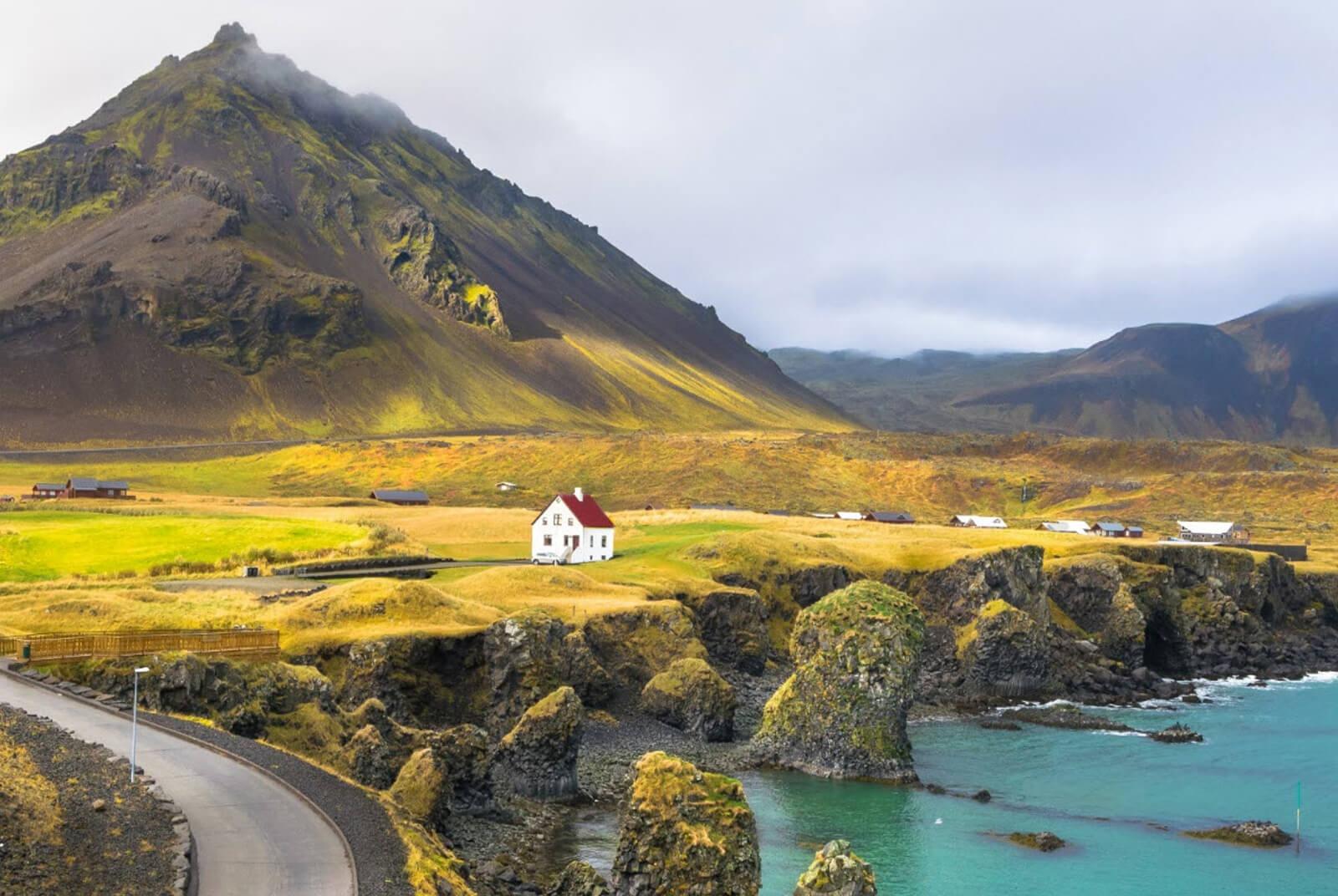
Important Note: This guide reflects conditions for 2025–2026. Weather, road conditions, and service availability can change quickly in Iceland. Always check with local providers and official sources before your trip. Remember: Iceland is living nature, and flexibility is key. ID1112