ES
ES  EN
EN 



F-ROADS ICELAND GUIDE: Driving, Opening Dates & 4x4 Guide
Discover everything about Iceland’s F-roads: 4x4 requirements, opening times, river crossings, safety tips, maps & tours in the Highlands.
What Are F-Roads in Iceland?
F-roads are mountain roads that lead into Iceland’s remote Highlands. They are unpaved gravel tracks, often rough and narrow, with river crossings and steep sections. Unlike the paved Ring Road, F-roads are only accessible in summer and require a 4×4 vehicle by law.
Driving these roads is part of the adventure: they take you to some of Iceland’s most stunning wilderness areas such as Landmannalaugar, Þórsmörk, and Askja. However, they also demand careful preparation and respect for nature.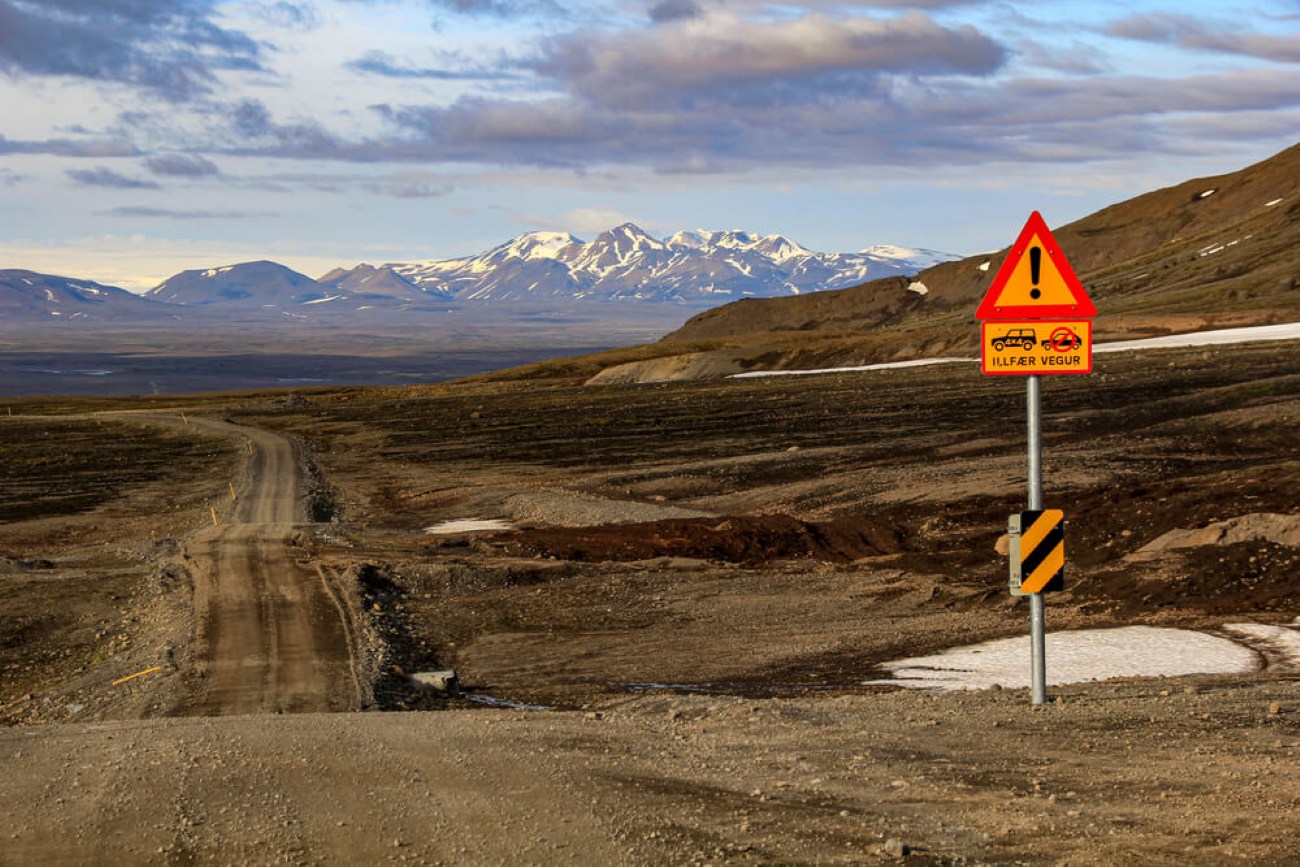
-
When Do F-Roads Open and Close?
-
Most F-roads open between early June and early July, once snow melts and conditions allow.
-
Closing usually happens in late August to mid-October, depending on weather, snowfall and road conditions.
-
“Open,” “closed,” and “no winter service” are distinct statuses—understanding them matters for safety.
Choose the Right Vehicle: 4×4 Required
-
Only 4×4 vehicles are legally allowed on F-roads. Standard 2WD cars are prohibited.
-
Depending on the difficulty of the route:
-
Easy F-roads: smaller 4×4 SUVs can manage.
-
Medium/Hard F-roads: require larger 4×4 vehicles or super jeeps.
-
-
On the harshest roads (big rivers, rugged terrain), super jeeps may be the only safe option.
River Crossings on F-Roads
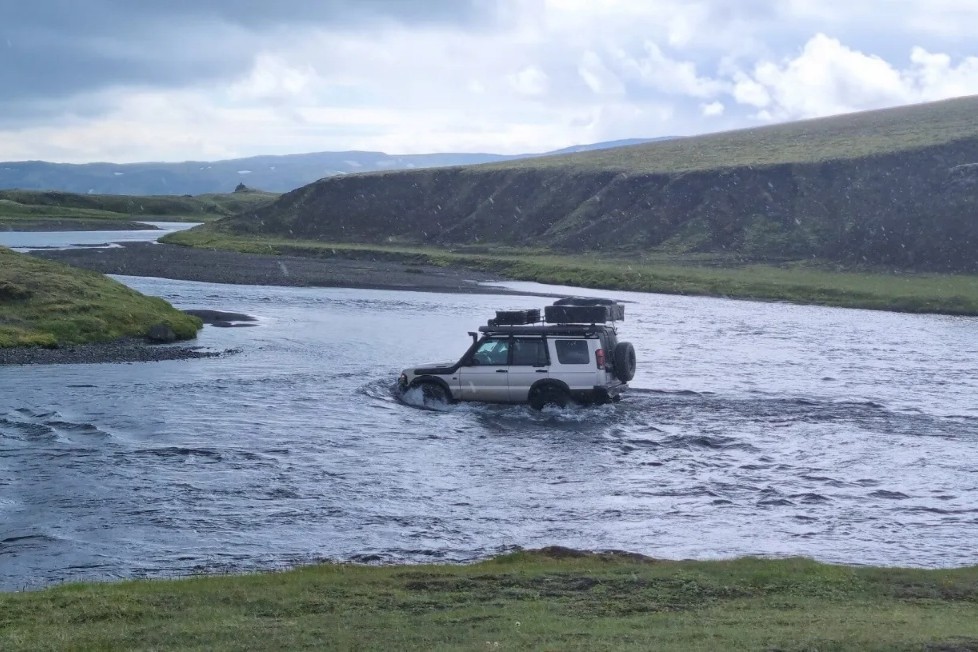
Many F-roads require crossing unbridged rivers. This is one of the biggest challenges and dangers for drivers in the Highlands.
Tips for safe river crossings:
-
Always stop and assess before crossing.
-
Drive slowly in first gear, steady throttle.
-
Cross at the shallowest point, ideally where other vehicles pass.
-
Never cross after heavy rain or glacial melt.
-
If in doubt – don’t cross.
⚠️ Important: River damage is not covered by car rental insurance. If you damage the car while crossing, you pay the cost.
Driving Times & What Affects Them
While Google Maps gives baseline times, real conditions cause delays.
Factors to account for:
-
Poor weather (rain, fog, wind)
-
River crossings and pauses to evaluate them
-
The vehicle’s capabilities and driver skill
-
Traffic (in summer, some F-roads can get busy)
-
Breaks, photo stops, assistance for others
Maps and Main F-Roads in Iceland
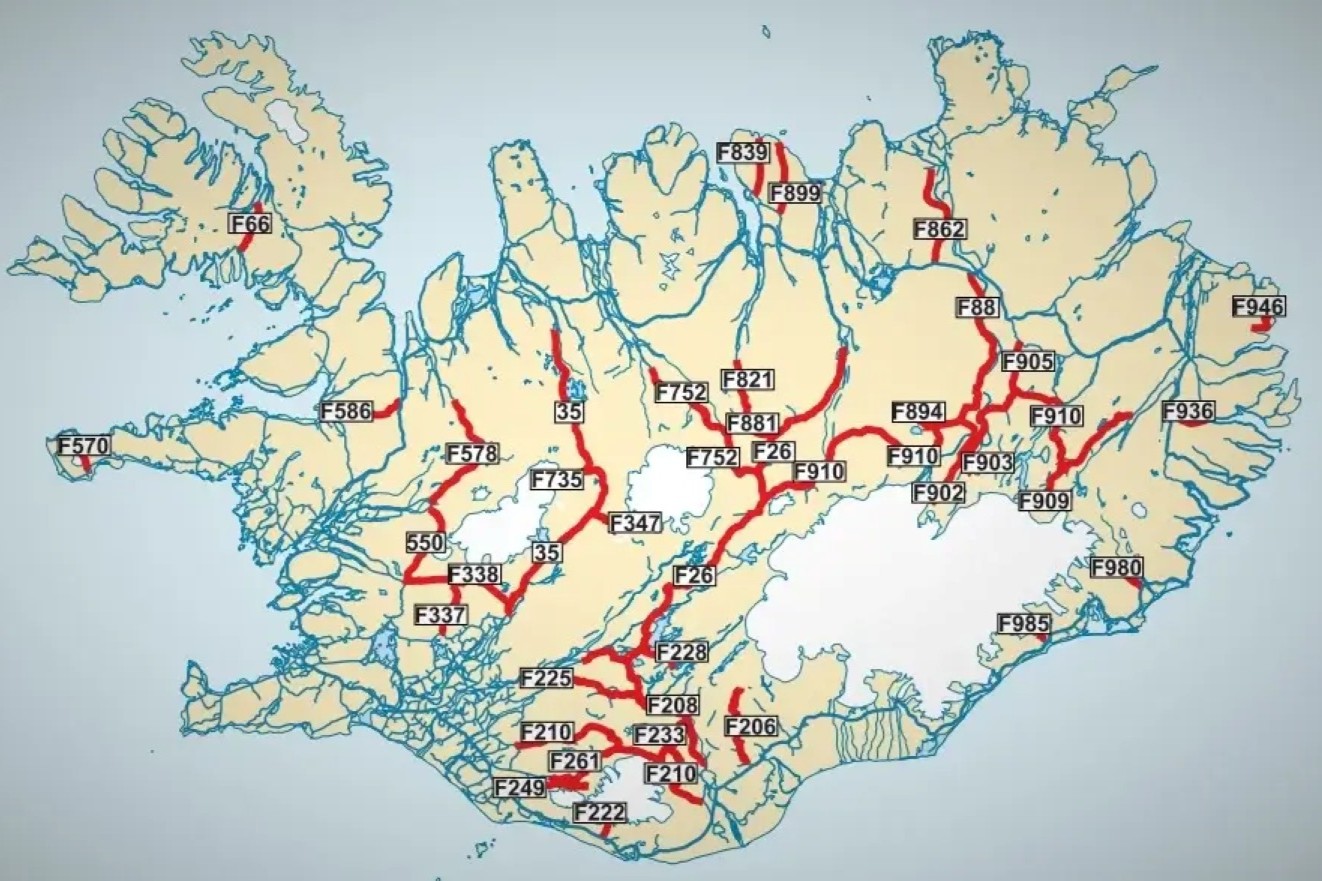
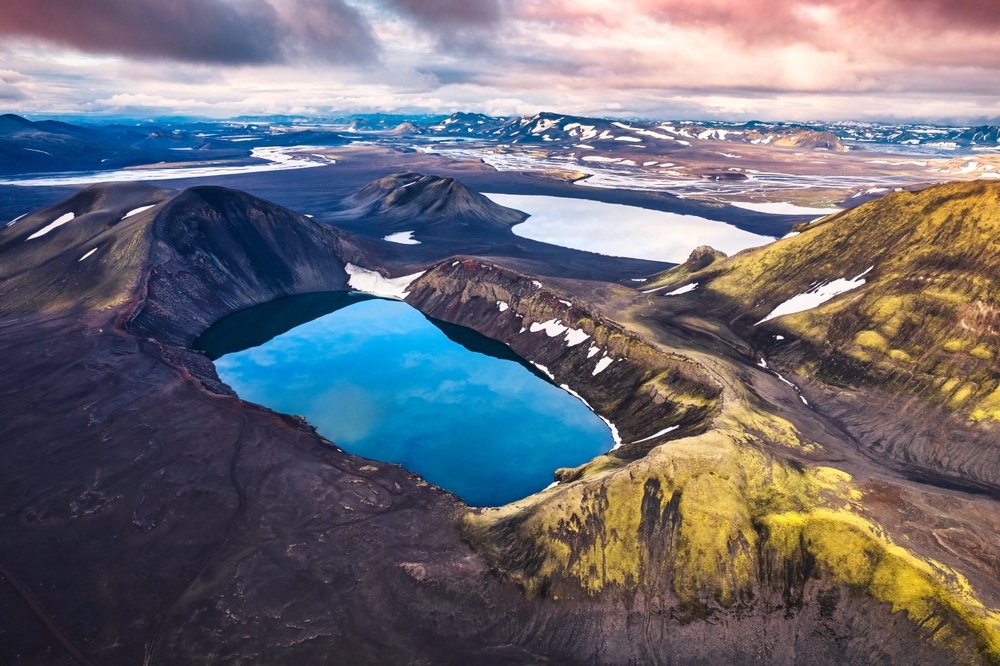
The Highlands cover about 40% of Iceland’s landmass, accessible only by F-roads. Here are some of the most popular routes:
-
F35 (Kjölur Route): Connects Gullfoss to North Iceland across the Highlands.
-
F26 (Sprengisandur): A long, challenging route between the south and north.
-
F208: Scenic access to Landmannalaugar, famous for its colorful rhyolite mountains.
-
F249: Leads to Þórsmörk, surrounded by glaciers and volcanic valleys.
➡️ Explore our Landmannalaugar tours
Official maps from the Icelandic Road Administration provide the latest road conditions and closures.
Notable F-Roads & Their Features
Here’s a selection of F-roads worth highlighting:
F-Road Key Highlights & Risks Suggested Vehicle / Notes F26 – Sprengisandsleið Long, remote route connecting south to north; one major river crossing Hagakvísl. Large 4×4 or super jeep recommended. F35 – Kjalvegur Easier route, no river crossings, connects southern & northern Iceland. Any 4×4 is sufficient. F88 – Öskjuleið Provides access to Askja. One main river crossing (Lindaá). Medium 4×4 or bigger. F208 – Fjallabaksleið (North/South) Popular route to Landmannalaugar. South part has multiple river crossings. North is easier; south more scenic but more challenging. F224 – Landmannalaugavegur Final detour to Landmannalaugar; includes two medium river crossings. Medium 4×4 to attempt full route; otherwise park before rivers. F249 – Þórsmerkurvegur Infamous for many river crossings, especially near Krossá river. Super jeep is safest; high risk for regular 4×4s. F210 – Fjallabaksleið syðri Scenic, moon-like landscapes; multiple crossings (some portions may drive in the stream). Medium 4×4 or stronger; experience needed. F232 – Öldufellsleið One medium river crossing over waterfall (Bláfjallafoss) plus scenic views. Medium 4×4 OK. F233 – Álftavatnskrókur Several significant river crossings. Super jeep preferred. These are just examples; there are many more F-roads listed in the full guide.
Tours and Alternatives to Driving Yourself
Not everyone feels comfortable driving F-roads. Luckily, there are plenty of alternatives:
-
Super jeep tours – Guided adventures with expert drivers.
-
Highlands day trips – From Reykjavík or South Iceland.
-
Highlands buses – Seasonal public transport to Landmannalaugar and Þórsmörk.
These options allow you to experience the Highlands without worrying about 4×4 driving or river crossings.
➡️ See our Highlands day trips and tours
FAQ – F-Roads in Iceland
Do I need a 4×4 for F-roads in Iceland?
Yes, it is a legal requirement. Standard cars and 2WD vehicles are not allowed.When do Iceland’s F-roads open?
Typically late June or early July, closing again in September. Dates vary by weather.Are river crossings covered by insurance?
No. Rental insurance never covers river crossing damage.Can I drive to Landmannalaugar without a 4×4?
No. The only alternatives are Highlands buses or guided tours.Are F-roads suitable for campervans?
Only if it’s a 4×4 campervan. Regular 2WD campers are prohibited. -
Important note: Driving on Iceland’s F-roads is only permitted with a 4×4 vehicle. Standard cars, motorhomes, and 2WD campers are not allowed on these roads. River crossings and off-road driving involve significant risks, and damages are not covered by standard rental insurance. Always check official road conditions before entering the Highlands, and if you are unsure about driving yourself, consider booking a guided Highlands tour for a safer experience. ID-1105